When you step into a luxury villa in Ibiza, the immediate appeal is undeniable.
Microcement floors, polished lime-washed walls, floor-to-ceiling glass, and custom Italian furniture paint a picture of effortless Mediterranean living.
Over the past five years, as island property values have reached historic highs, the cosmetic execution of luxury homes has reached an all-time peak.
Yet behind those pristine surfaces lies a persistent industry secret.
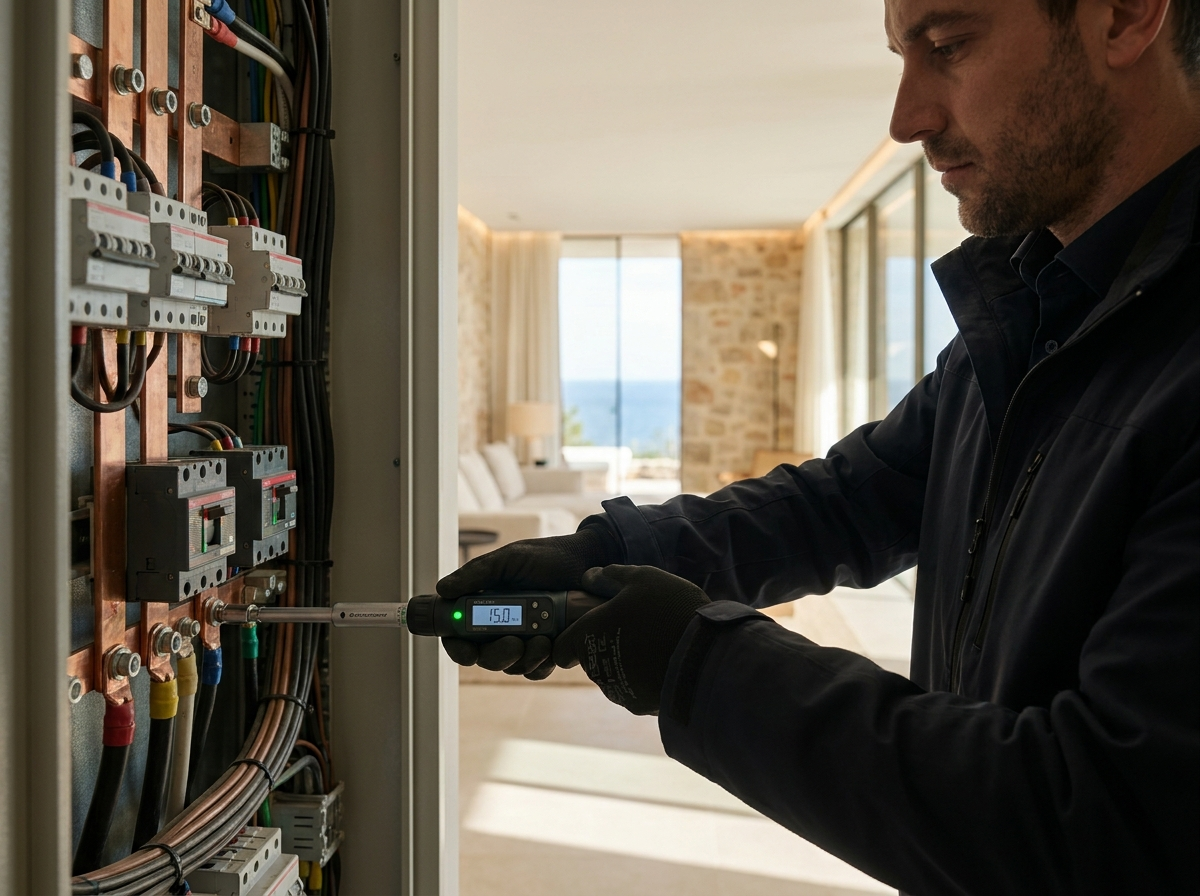
Inspect behind the plasterboard, open the main electrical panels, or walk through the technical utility rooms of many multi-million euro villas, and you will frequently find a starkly different reality: substandard electrical wiring, questionable plumbing, and technical installations executed with alarming cut corners.
While property prices across Ibiza continue to climb, a significant portion of these inflated valuations reflect market inflation rather than actual technical upgrades to the home. Buyers are paying top-tier prices for properties that haven't received meaningful infrastructure investments in years—or even decades.
The EU Net-Zero Directives: Regulatory Pressure for Villa Owners, Developers & Real Estate Professionals
This issue extends far beyond immediate safety or aesthetics. A major regulatory shift is underway across the European Union.
Whether you are a property owner, property developer, real estate agent, or estate manager, understanding the binding directives under the updated Energy Performance of Buildings Directive (EPBD) and new ISO energy management standards coming into force is no longer optional:
For Property Owners: Mandatory energy efficiency upgrades mean that properties with poor Energy Performance Certificates (EPCs)—ratings in classes E, F, or G—face regulatory penalties, renovation mandates, or future restrictions on renting and selling.
For Developers & Builders: EU regulations strictly mandate significant primary energy reductions, a complete phase-out trajectory for stand-alone fossil-fuel heating systems, and mandatory solar PV readiness for new builds and major renovations.
For Real Estate Agents & Property Managers: An Energy Performance Certificate (EPC) is no longer just administrative paperwork—it is a critical valuation driver. Improving a villa's energy rating from an 'E' or 'D' to an 'A' or 'B' directly boosts market appraisal value, protects rental yields, and prevents homes from becoming "stranded assets."
Island Statistics: What's Really Inside Ibiza's Luxury Homes?
Based on technical audits conducted across high-end island properties, the statistics reveal how widespread these invisible issues really are:
- 7 out of 10 villas have missing or incomplete labeling for electrical panels and water supply lines, making emergency shut-offs and basic troubleshooting unnecessarily complex and dangerous.
- 5 out of 10 villas suffer from poor ongoing maintenance, with critical HVAC, filtration, and power distribution systems operating far below efficiency or near point of failure.
- 3 out of 10 villas carry active electrical hazards directly resulting from poor quality control by the installation or technician companies hired during construction or renovation.
The Nervous System of Your House
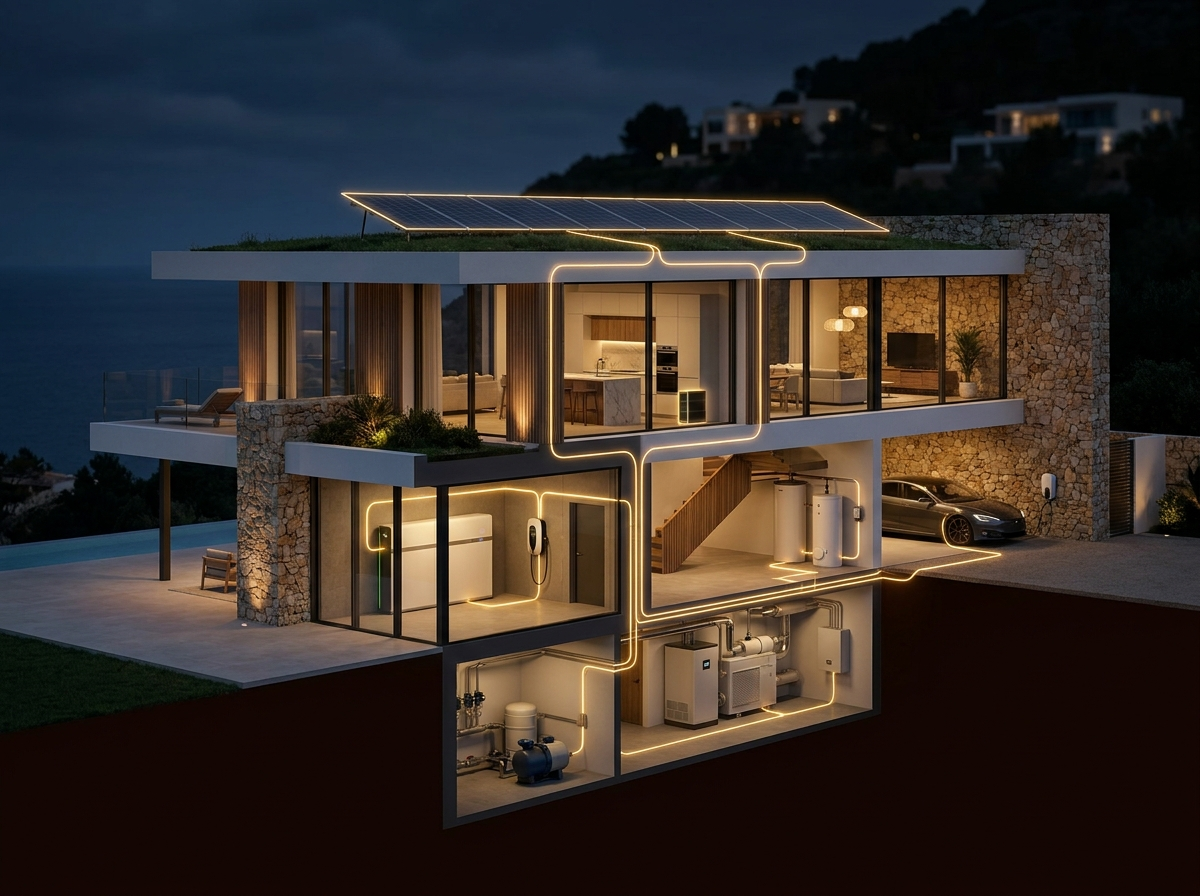
Think of a luxury villa as a living body. The foundation, load-bearing walls, and roof form the skeleton. The electrical, PV, plumbing, and HVAC systems are the nervous system.
You can buy the most expensive designer furniture, import marble tables, and curate high-end artwork, but if the house’s nervous system is failing, the entire structure becomes unhealthy, inefficient, and unsafe.
1. Inefficiency & Outdated "If It Works, Don't Touch It" Mentality
Many luxury properties still rely on legacy, high-consumption lighting and outdated, low-efficiency HVAC units. Too many owners hold onto the mindset of "if it works, why change it?" without realizing that these inefficient systems drain massive amounts of power, strain the grid, fail upcoming EU standards, and drive up operational running costs unnecessarily.
2. Poor System Design & Severe Phase Imbalance
Even in newly renovated properties, installations are frequently designed poorly. In large three-phase electrical supplies, we regularly see extreme load imbalances. Over time, contractors or previous owners added heavy power consumers—such as pool heat pumps, EV chargers, or extra AC units—without ever checking or rebalancing the load across the phases. The result? Unexplained trips, overheated neutrals, damaged electronics, and severe grid strain.
3. Squeezed Technical Rooms & Severe Fire Hazards
A major pattern in Ibiza luxury real estate is refusing to dedicate sufficient space for technical rooms. Developers and owners try to maximize living space by squeezing tens of thousands of euros in solar inverters, battery storage, high-capacity HVAC manifolds, and automation racks into tiny, unventilated cupboards or improper utility corners.
Overcrowding high-voltage equipment without adequate cooling, airflow, or clearance is a major fire hazard that can destroy the entire house in minutes.