
September 2, 2026

Future-Proofing Infrastructure: Smart Buildings, EV Charging & the 2027 Mobility Shift

Future-Proofing Infrastructure: Smart Buildings, EV Charging & the 2027 Mobility Shift

The definition of a luxury property is changing. Architecture, location, privacy and design remain fundamental, but the next generation of exceptional properties will also be judged by how intelligently they operate.

Energy systems, building controls, electric mobility and charging infrastructure are moving from optional upgrades to strategic property infrastructure. For owners, developers and hospitality operators, the question is no longer simply what a building looks like. It is how well it performs, how resilient it is, and how ready it is for what comes next.

2027: Infrastructure Becomes Part of the Asset

Across Europe, regulation and technology are pushing buildings toward greater intelligence and electrification. In Ibiza, where premium villas, hotels and developments already operate with substantial energy demand, this creates a clear opportunity: design the infrastructure as part of the property rather than adding disconnected systems later.

1. Smart Buildings: From Automation to Intelligence

The European Union's revised Energy Performance of Buildings Directive places greater emphasis on smart building capabilities. The Smart Readiness Indicator (SRI) is designed to assess how effectively a building can adapt its operation to occupants, energy conditions and the wider electricity system.

The SRI is not simply another technology label. It reflects a broader shift toward buildings that can measure, communicate, optimise and respond.

Under the revised EPBD, the European Commission is required by 30 June 2027 to adopt a delegated act establishing the application of the SRI to certain non-residential buildings with heating, air-conditioning or combined HVAC systems above 290 kW effective rated output.

A practical retrofit sequence
  • Smart metering
  • IoT connectivity
  • Energy monitoring
  • Building controls
  • HVAC integration
  • Battery storage
  • Solar generation
  • EV charging
  • Intelligent energy management

Make the building measurable, controllable and increasingly autonomous.

The objective is not to install technology for its own sake. It is to create a system in which the building understands its energy use and can make better decisions automatically.

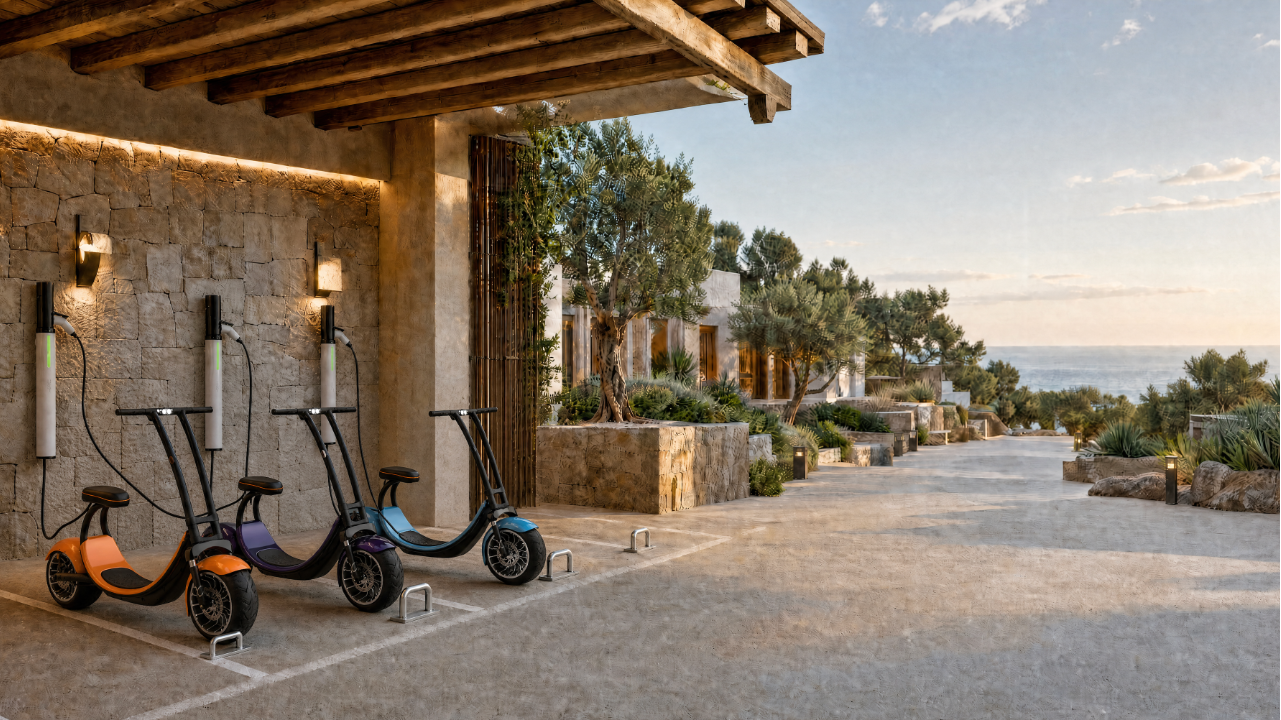
2. EV Charging Becomes Standard Infrastructure

Electric vehicles are rapidly becoming part of the normal property experience. The revised EPBD reinforces this transition by requiring Member States to ensure that, from 1 January 2027, non-residential buildings with more than 20 parking spaces meet specified charging or pre-cabling requirements.

For many commercial and hospitality properties, this means planning for charging capacity is no longer something to leave until the final stage of a project.

The stronger approach is to connect EV infrastructure to the property's wider energy system:

  • Solar generation
  • Battery storage
  • Building energy management
  • Dynamic load management
  • EV charging
  • Grid connection capacity

When these systems communicate, charging can become an energy-management asset rather than simply another electrical load.

3. Mobility Is Becoming Part of the Property Experience

Luxury mobility is expanding beyond the traditional car. Electric scooters, e-bikes, electric mopeds and small fleet vehicles are increasingly relevant to resorts, hotels, private estates and large residential developments.

A properly designed mobility infrastructure can include dedicated parking, secure access, charging, GPS tracking, fleet management and energy monitoring.

This is particularly relevant in Ibiza, where moving efficiently around a property, between accommodation areas or through local communities can be part of the guest and owner experience.

4. Spain's 2027 E-Scooter Deadline

Spain's rules for personal mobility vehicles (VMPs) introduce an important 2027 milestone. VMPs marketed from 22 January 2024 must have the required certification. Non-certified VMPs that fall under the transitional regime can circulate only until 22 January 2027.

After that date, only compliant certified VMPs can circulate under the applicable rules.

For property owners and hospitality operators managing mobility fleets, the practical question is therefore broader than whether a vehicle works:

Is it compliant, identifiable, insurable and appropriate for legal road use in Spain?

Fleet procurement should consider certification, registration, insurance and the exact legal category of every vehicle before deployment.

5. VMP vs. Road-Homologated Electric Vehicles

Not every electric two-wheeler belongs to the same legal category. A conventional VMP is not the same thing as a road-homologated electric vehicle.

The Astreea One+, for example, is presented by its manufacturer as an L1e-B road-homologated electric vehicle rather than a conventional 25 km/h VMP. That distinction matters when assessing registration, insurance and legal road use in Spain.

For any fleet deployment, the exact vehicle configuration and Spanish homologation requirements should be verified before purchase or operation.

6. Why This Matters for Luxury Properties

For a premium property, infrastructure should be evaluated across more than immediate energy savings.

  • Operating cost
  • Energy resilience
  • Regulatory readiness
  • Occupant and guest experience
  • Future adaptability
  • Asset positioning

A villa, hotel or development with integrated energy and mobility infrastructure is easier to operate intelligently and easier to adapt as technology and regulation evolve.

The most valuable infrastructure is often the infrastructure that prevents expensive retrofits later.

7. The Ibiza SunPower Approach

At Ibiza SunPower, we see solar, battery storage, EV charging, mobility and smart building technology as parts of the same infrastructure strategy.

The objective is not to create a collection of independent systems. It is to build an energy ecosystem in which generation, storage, consumption, mobility and building controls work together.

Control. Efficiency. Resilience. And the ability to remain ready for what comes next.

Future-Proof the Property Before the Regulations Catch Up

The best time to design tomorrow's infrastructure is before tomorrow arrives.

For luxury villas, hotels and developments in Ibiza, the opportunity is to move beyond individual technology upgrades and create a property that is intelligent, efficient and prepared for the next generation of energy and mobility.

Ibiza SunPower
300 days of sun. Make the most out of it.

Future-Proof Your Ibiza Property

Discover how integrated solar, battery storage, smart energy management, EV charging and electric mobility can prepare your property for the next generation of infrastructure.

Thank you! Your submission has been received!
Oops! Something went wrong while submitting the form.
Contact Us

Ready to work together?

View contacts